





Lorsque la chaleur estivale se dissipe enfin, le jardin connaît un second souffle. Les fleurs d'automne prennent le relais des floraisons estivales, et certaines des plus belles couleurs de l'année apparaissent entre septembre et le premier gel intense. Ce guide présente les plantes vivaces et annuelles à floraison automnale qui valent la peine d'être plantées, le moment où chacune atteint son apogée de floraison, et quelles fleurs d'automne tiennent réellement en vase une fois coupées. Nous arrangeons des fleurs pour gagner notre vie, et l'automne est la saison où nos designers se disputent le plus. Il y a tant à aimer.
Qu'est-ce qu'une fleur d'automne ?
La période de floraison est l'essentiel de l'histoire. Les vraies fleurs d'automne commencent soit à la fin de l'été et continuent de fleurir jusqu'au gel, soit attendent septembre pour s'ouvrir. De nombreuses plantes vendues comme fleurs d'été, comme les rudbeckias et les dahlias, gèrent la transition de l'été à l'automne mieux que tout ce qui pourrait être planté en octobre.
La plupart des plantes ci-dessous sont des vivaces qui reviennent chaque année. Quelques-unes sont des annuelles qui fleurissent continuellement du milieu de l'été jusqu'à ce qu'un gel les élimine. Les zones de rusticité vous indiquent si une vivace survit à l'hiver là où vous vivez, alors vérifiez la plage de zones avant de planter. Et si vous voulez le look sans creuser, un fleuriste peut vous remettre des fleurs d'automne de saison en vase le jour même.
Les meilleures vivaces à floraison automnale
Ces plantes rustiques sont l'épine dorsale d'un jardin d'automne, remplissant les massifs et les bordures mixtes chaque automne avec toujours plus à offrir.
1. Chrysanthèmes (Mums)
Rien n'évoque mieux l'automne qu'un massif de chrysanthèmes sur un perron. Les chrysanthèmes de jardin fleurissent en bronze, rouge, or, violet et blanc sur un feuillage vert dense, et une plante achetée en boutons serrés fleurira pendant six semaines ou plus. Ils sont également la fleur de naissance de novembre. Si vous cultivez les vôtres, pincez les tiges au début de l'été ; ils deviennent grêles sans cela.
Période de floraison : fin de l'été jusqu'au gel intense. Ensoleillement : plein soleil. Zones : 5 à 9. Hauteur et port : 30 à 90 cm, en monticule et étalé.

2. Asters
Les grands asters animent le jardin d'automne après que presque tout le reste ait cessé de fleurir. Leurs fleurs en forme de marguerite s'ouvrent en violet, bleu lavande, rose et blanc juste au moment où les vivaces estivales s'estompent, attirant des dizaines de papillons les après-midi chauds. Les asters de Nouvelle-Angleterre sont indigènes, robustes et s'épanouissent aussi bien en bordures qu'en prairies. L'aster est la fleur de naissance de septembre, ce qui semble approprié.
Période de floraison : fin de l'été à l'automne, souvent fin d'automne. Ensoleillement : plein soleil à mi-ombre. Zones : 3 à 8. Hauteur et port : 30 à 120 cm, dressé et s'étalant lentement.
3. Rudbeckias
Des fleurs jaune vif, ressemblant à des marguerites, autour d'un centre sombre, fleurissant en masses du milieu de l'été à octobre. Les rudbeckias sont indigènes et tolèrent la sécheresse une fois établis, et ils se ressèment poliment dans les bordures et les prairies. Les chardonnerets mangent les têtes de graines tout l'hiver si vous sautez le nettoyage d'automne.
Période de floraison : mi-été à mi-automne. Ensoleillement : plein soleil. Zones : 3 à 9. Hauteur et port : 60 à 90 cm, touffes dressées.
4. Anémones du Japon
Les anémones du Japon font flotter des fleurs roses et blanches en forme de coupe sur de hautes tiges fines qui bougent à chaque brise. Elles font partie des rares vivaces à floraison automnale qui préfèrent l'ombre partielle, ce qui en fait la solution pour le coin sombre où les chrysanthèmes végètent. Donnez-leur de l'espace ; elles se répandent par stolons une fois établies.
Période de floraison : fin de l'été à mi-automne. Ensoleillement : ombre partielle à soleil doux. Zones : 4 à 8. Hauteur et port : 60 à 120 cm, dressé et étalé.
5. Sedum (Autumn Joy)
Le sedum passe l'été en tant que succulente verte soignée, puis ses grappes de minuscules fleurs étoilées s'ouvrent en rose tendre et s'assombrissent en rouille à mesure que l'automne avance. C'est une plante totalement résistante à la sécheresse, et un sol riche la fait en fait s'affaisser, alors évitez l'engrais. Peu de vivaces travaillent plus dur pour attirer les papillons et les abeilles aussi tard dans la saison.
Période de floraison : fin de l'été à l'automne. Ensoleillement : plein soleil. Zones : 3 à 9. Hauteur et port : 45 à 60 cm, dressé.
6. Verge d'or
La verge d'or arbore des floraisons éclatantes en panaches jaune vif sur les bords de routes et dans les jardins indigènes au début de l'automne, et elle attire les pollinisateurs mieux que presque toute autre fleur tardive. On lui reproche injustement les allergies automnales ; l'ambroisie fleurit en même temps, et le pollen de la verge d'or est trop lourd pour être emporté par le vent. Les nouvelles variétés restent compactes dans un massif de jardin indigène au lieu de se propager sauvagement.
Période de floraison : fin de l'été à l'automne. Ensoleillement : plein soleil. Zones : 3 à 9. Hauteur et port : 60 à 150 cm, dressé, étalé.
7. Colchique d'automne
Le colchique d'automne triche avec le calendrier. Plantez les cormes à la fin de l'été et des fleurs violettes en forme de coupe, de roses tendres et de lavandes, jailliront du sol nu en quelques semaines, sans feuilles avant le printemps. On dirait une fleur de printemps qui fleurit à la mauvaise saison, ce qui fait tout son charme. Les cormes sont toxiques, alors placez-les loin des animaux de compagnie curieux.
Période de floraison : septembre à octobre. Ensoleillement : plein soleil à mi-ombre. Zones : 4 à 8. Hauteur et port : 15 à 25 cm, touffes basses.
8. Monarde
Les têtes de fleurs ébouriffées écarlates, roses et violettes de la monarde reposent sur des tiges robustes comme des feux d'artifice pris en plein éclat, et les colibris traitent les fleurs tubulaires comme une station-service. Elle est indigène, parfumée et vigoureuse à l'excès. Divisez-la tous les quelques ans, sinon elle envahira discrètement tout le massif.
Période de floraison : mi-été jusqu'au début de l'automne. Ensoleillement : plein soleil. Zones : 4 à 9. Hauteur et port : 60 à 120 cm, dressée, à propagation rapide.
9. Dahlias
Les dahlias atteignent leur apogée juste à la fin de l'été, produisant des fleurs éclatantes, de la taille d'une assiette jusqu'à de petits pompons serrés, dans des tons chauds, du bordeaux profond et presque toutes les couleurs sauf le bleu, sur de hautes tiges qui appellent au tuteurage. Ils continuent jusqu'au premier gel qui les abat. Dans les climats froids, déterrez les tubercules après le gel et stockez-les au sec pour le printemps.
Période de floraison : mi-été au premier gel. Ensoleillement : plein soleil. Zones : 8 à 10, cultivées comme annuelles ailleurs. Hauteur et port : 30 à 180 cm, dressé.
10. Graminées ornementales
Pas des fleurs exactement, mais aucun jardin d'automne ne fonctionne sans graminées ornementales. Les herbes aux écouvillons (fountain grass), les panicums (switchgrass) et les miscanthus envoient des panaches plumeux au début de l'automne qui captent la faible lumière automnale et continuent de bouger tout l'hiver. L'herbe aux écouvillons pourpre (purple fountain grass) mérite sa place pour son feuillage bordeaux foncé seul. Les cerfs passent à côté des graminées, ce que la plupart des plantes de cette liste ne peuvent pas revendiquer.
Période de floraison : panaches de la fin de l'été à l'hiver. Ensoleillement : plein soleil. Zones : 5 à 9 ; herbe aux écouvillons pourpre 9 à 10, annuelle ailleurs. Hauteur et port : 60 à 180 cm, arquée ou dressée.
Autres fleurs d'automne à découvrir
Quelques vivaces moins célèbres complètent la saison. La sauge arbustive mexicaine (Mexican bush sage) produit de hautes hampes de fleurs violettes veloutées au feuillage aromatique de la fin de l'été à l'automne dans les zones 8 à 10. L'arbre à brouillard bleu (caryopteris) bourdonne d'abeilles, ses grappes de fleurs bleu poudré recouvrent des tiges élancées au début de l'automne. L'hélénium apporte des teintes riches de cuivre et d'or, et la cimicifuga ouvre des épis de fleurs blanches parfumées à l'ombre partielle. Aucune d'entre elles n'est difficile à cultiver dans un sol bien drainé et en plein soleil, et toutes prolongent la saison de floraison automnale de quelques semaines supplémentaires.
Fleurs annuelles pour une couleur automnale ininterrompue
Les fleurs annuelles ne se soucient pas des zones. Plantez-les, et leurs floraisons colorées s'épanouissent sans relâche jusqu'à ce que le gel mette fin à la fête, offrant des mois de couleurs faciles à partir de quelques euros de plantes.
Célose
Les panaches veloutés et les crêtes ondulées de la célose se déclinent en rouge, orange et or, les tons chauds exacts de la saison. Elle fleurit de l'été à l'automne sans interruption, résiste à la chaleur, et les fleurs sèchent magnifiquement pour les couronnes.
Période de floraison : été au gel. Ensoleillement : plein soleil. Hauteur et port : 15 cm à 90 cm, dressée.
Marguerites africaines
Les marguerites africaines sont des fleurs de saison fraîche. Leurs fleurs en forme de marguerite s'ouvrent abondamment au printemps, végètent pendant le plein été, puis reviennent en force dès que les nuits deviennent fraîches, en violet, blanc, orange et des teintes métalliques lunatiques. Vivaces uniquement dans les zones 10 et 11, mais qui valent la peine d'être replantées chaque année.
Période de floraison : printemps, puis de nouveau début d'automne au gel. Ensoleillement : plein soleil. Hauteur et port : 30 à 60 cm, en monticule.
Pensées et violettes
Plantez des pensées au début de l'automne et elles fleuriront pendant les mois frais, résisteront à un léger gel, et dans les climats doux, fleuriront directement en hiver. Leurs minuscules fleurs sont joyeuses dans les parterres, les jardinières et les paniers suspendus lorsque le reste du jardin s'endort.
Période de floraison : automne au printemps dans les climats doux. Ensoleillement : plein soleil à mi-ombre. Hauteur et port : 10 à 20 cm, bas et soigné.
Œillets d'Inde
Les œillets d'Inde fleurissent continuellement en or, rouille et orange de la fin du printemps jusqu'au gel, ne demandent rien et poussent facilement à partir de graines. Anciens pour une raison.
Période de floraison : fin du printemps au gel. Ensoleillement : plein soleil. Hauteur et port : 15 cm à 90 cm, touffu.
Utilisation des fleurs d'automne dans l'aménagement paysager
Un bon aménagement paysager d'automne repose sur les couches. Placez les plantes hautes, dahlias, sauge arbustive mexicaine et les graminées ornementales plus hautes, à l'arrière des bordures, puis laissez les plantes de taille moyenne comme les asters, la verge d'or et l'hélénium remplir le milieu. Les fleurs basses et en monticules, les chrysanthèmes, les pensées et les sédums, bordent l'avant. Mélanger les formes de fleurs est aussi important que la hauteur : les marguerites, les panaches, les épis et les grappes plates offrent de la variété à l'œil même lorsque les couleurs se répètent.
Les contenants ont aussi leur place en automne. Un grand pot de chrysanthèmes flanqué de pensées et de lierre rampant décorera un pas de porte de septembre à Thanksgiving, et les jardinières garnies de violettes continueront de produire de la couleur longtemps après que les parterres se soient estompés. L'automne est également la période où les rosiers de jardin produisent une dernière floraison tardive, car les nuits plus fraîches intensifient leurs nuances de rose, de rouge et de jaune.
Pour la structure, associez toutes ces fleurs à des arbustes qui changent de couleur : l'hortensia à feuilles de chêne devient rouge lie de vin, et l'itéa s'embrase d'orange. Les arbustes maintiennent l'ossature du jardin tandis que les annuelles et vivaces vibrantes effectuent le travail éclatant. Plantez par groupes de trois ou cinq plutôt qu'à l'unité ; la couleur automnale est mieux perçue par larges touches.
Fleurs d'automne qui tiennent bien en vase
Les fleurs coupées obéissent à des règles différentes. Ce qui prospère en bordure ne dure pas toujours dans l'eau, et quelques divas du jardin se décomposent le lendemain de leur coupe.

Les chrysanthèmes sont la pièce maîtresse des arrangements floraux d'automne. Deux semaines en vase sont normales si vous changez l'eau tous les deux jours. Les asters, les tournesols, les roses et les baies d'hypericum vous offrent tous une bonne semaine ou plus, et le blé et les herbes séchées durent indéfiniment. Les tournesols ancrent la plupart des bouquets d'automne pour une bonne raison ; ils sont robustes, ils évoquent instantanément l'automne, et leur signification, loyauté et adoration, convient à presque toutes les occasions. Les dahlias sont le compromis. Ils sont magnifiques et meurent vite, perdant leurs pétales au troisième jour. Profitez-en ce soir depuis votre propre jardin ; ne construisez pas un cadeau autour d'eux.
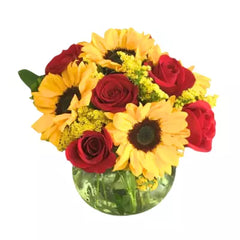
Nos designers composent des arrangements floraux d'automne précisément avec ces tiges. Expressions d'Automne met en scène de grands tournesols encadrés de chrysanthèmes et de marguerites ; Moisson Coucher de soleil mélange les tournesols avec du blé séché et des baies d'hypericum rouges pour un aspect "cueilli dans le champ". Pour une table de dîner, les centres de table d'automne bas comme notre Ember, riche en chrysanthèmes, dégagent la vue sur la nourriture. Et lorsqu'une plante est plus appropriée qu'un bouquet, les chrysanthèmes en pot décorent un porche jusqu'à Thanksgiving.
Chaque arrangement est livré à la main par un fleuriste local, jamais emballé et expédié, et si une tige est hors saison, nos designers la remplacent par une de valeur égale ou supérieure. Commandez avant 14h du lundi au samedi, ou midi le dimanche, dans le fuseau horaire du destinataire, et la livraison le jour même est disponible dans la plupart des régions.
Notes de plantation et d'entretien pour un jardin d'automne
Plantez les vivaces au moins six semaines avant la date de votre premier gel afin que les racines s'établissent avant que le sol ne se refroidisse. Arrosez-les bien, puis paillez pour retenir l'humidité et amortir les alternances de gel et de dégel. Presque toutes les plantes de cette liste aiment un sol bien drainé ; des pieds gorgés d'eau en hiver tuent plus de fleurs d'automne que le froid.
La plupart des fleurs d'automne ont besoin de plein soleil, six heures minimum. Les plantes indigènes tolérantes à la sécheresse, comme les rudbeckias, la verge d'or et le sedum, se portent même mieux sans soins excessifs. Supprimez les fleurs fanées des asters et des dahlias pour favoriser l'apparition de nouveaux bourgeons, mais laissez les graminées ornementales et le sedum en place tout l'hiver ; les graines nourrissent les oiseaux et la structure est belle sous le givre.
Pensez aussi aux pollinisateurs. Le nectar de fin d'été et d'automne est rare, et un jardin d'automne rempli d'asters, de sédums et de verges d'or nourrit les abeilles et les papillons jusqu'au gel intense, bien après la disparition des fleurs estivales. Si les cerfs sont un problème, penchez-vous sur les graminées, les anémones et la monarde ; ils passent devant les trois.
Entretenez votre jardin d'automne
Le secret d'un jardin d'automne qui ne faiblit jamais est le chevauchement. Échelonnez les périodes de floraison afin que quelque chose de nouveau s'ouvre toujours : les rudbeckias et la monarde font le pont entre l'été et l'automne, les asters et les chrysanthèmes atteignent leur apogée en milieu de saison, et les colchiques d'automne ainsi que les graminées ornementales clôturent l'année. Faites cela, et vos bordures porteront de vraies couleurs de la fin de l'été au premier gel intense.
Si vous planifiez l'autre extrémité du calendrier, notre guide sur les meilleures fleurs d'été couvre le relais inverse. Et lorsque le jardin se taira enfin, vous pourrez acheter toutes nos fleurs pour des compositions florales d'automne, conçues et livrées par une entreprise familiale qui fait cela depuis 1903.