







Types of Funeral Flowers: A Guide to Every Arrangement
Choosing among the different types of funeral flowers gets easier once you know what each arrangement is for. Some pieces stand beside the casket at the service. Others sit on a table, or go home with the family afterward. This guide walks through every major type of funeral flower arrangement, the traditional funeral flowers inside them, and what each one says, so you can send a tribute that truly honors your loved one. Every arrangement we make is hand-delivered by local florists, the way we've done it since 1903.
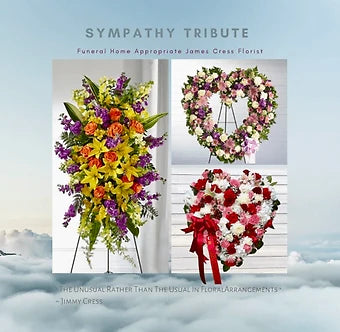
The Main Types of Funeral Flower Arrangements
Funeral arrangements follow a quiet etiquette: the closer your relationship, the larger and more central the piece. Immediate family sends the casket spray. Extended family and close friends send standing pieces. Coworkers and neighbors usually send baskets or a bouquet to the home. Here is each type, one by one.
Casket Sprays
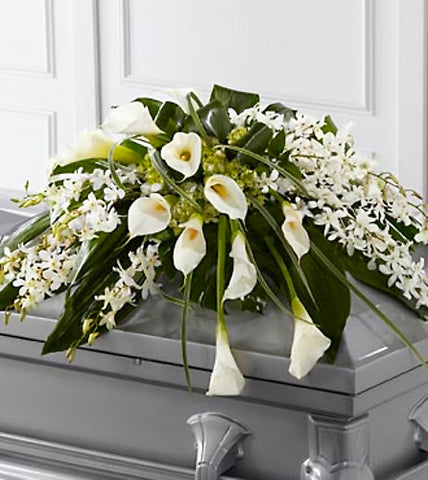
Casket sprays rest on top of the casket itself, which makes them the most personal piece at any funeral. They come from the spouse, children, or parents of the deceased, and almost never from anyone else. A full-couch spray covers a closed casket end to end; a half-couch spray covers the lower half when the casket is open. White lilies and roses are the classic choice, though we design plenty around a favorite color or bloom.
Standing Sprays
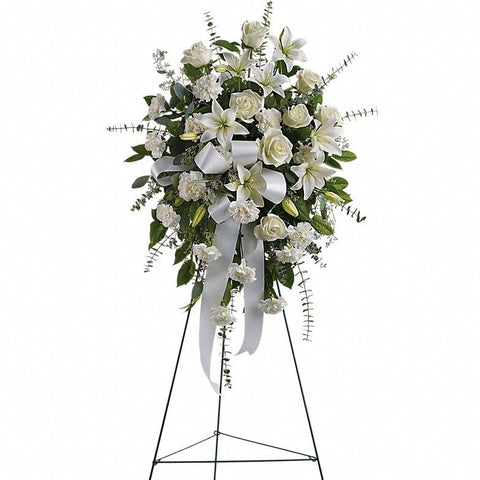
Standing sprays are displayed on easels beside the casket, so they stay visible through the whole ceremony. They read as a formal tribute and suit extended family, close friends, or a group sending together. Most are one-sided, designed to face the mourners.
Funeral Wreaths

The circle of a funeral wreath stands for eternal life, a meaning that goes back to ancient Greece. Wreaths serve as a mark of respect and remembrance, displayed on easels like standing sprays, and their shape carries a message of continuity: love that does not end when a life does. They suit almost any sender, which makes them a popular choice when several families go in on one piece together.
Crosses and Hearts
A standing cross is a natural fit for a faith-based service and typically comes from a family member or the congregation. Heart arrangements express love plainly, and they usually come from those closest to the person: a partner, children, grandchildren. Both are shaped pieces built on easels, so they hold their form through a long service.
Funeral Baskets and Floor Arrangements
Funeral baskets sit on the floor or on stands around the casket. They are the most flexible piece, suitable from coworkers, neighbors, or family friends, and appropriate at the service or at the home. One practical point in their favor: baskets travel. Standing sprays and wreaths look impressive at the ceremony, but they are built on easels and rarely go anywhere afterward. A basket goes home with the family and keeps offering comfort and support for another week.
Cremation Flowers
Cremation services call for smaller-scale pieces: wreaths sized to surround an urn, table arrangements for a memorial display, or a simple grouping beside a photo. Cremation flowers carry the same meaning as any funeral arrangement; they are simply designed for a different setting.
Traditional Funeral Flowers and Their Meanings
The blooms inside the arrangement carry meaning too. These are the most traditional funeral flowers and what each one has come to express.
White Lilies
Lilies are the flower most commonly associated with funerals, and white lilies are the most traditional of all. They stand for the innocence restored to the soul, a message of rebirth, peace, and encouragement for the family. If you are unsure what to send, a lily arrangement is never out of place.
Roses
Every rose color says something different at a funeral. White roses represent purity, reverence, and remembrance. Red roses express deep love and respect, and usually come from a spouse or partner. Pink roses convey grace, gratitude, and appreciation, while yellow roses honor a strong friendship. A single rose placed among other blooms is a quiet way to mark a special bond.
Carnations
Carnations hold their beauty longer than almost any other cut flower, which makes them a practical backbone for funeral pieces that need to last through a wake, a service, and a burial. Pink carnations stand for remembrance. White carnations mean pure love and innocence. They are also among the more fragrant funeral flowers, filling a room softly.
Chrysanthemums
Meaning depends on where you are with this one. In Japan, China, Korea, and much of Europe, chrysanthemums are used almost exclusively for mourning, placed on graves and woven into funeral wreaths. In the United States, the mum reads as a sturdy, warm bloom and shows up in plenty of autumn arrangements. For a family with roots in Europe or Asia, an arrangement built on white chrysanthemums shows real cultural care.
Orchids, Hydrangeas, and Other Meaningful Blooms
A few more blooms you will see in sympathy work. Orchids, often given as a living plant, are a lasting expression of condolences and love, a gift the family keeps well past the service. Hydrangeas convey heartfelt, honest emotion. Gladioli stand for strength of character, a fitting tribute to someone who held a family together. Forget me nots mean exactly what their name promises: true remembrance. And hyacinth, particularly purple hyacinth, expresses deep sorrow, a bloom for grief that is hard to put into words.
Funeral Flower Colors and What They Convey
White is the traditional funeral color: peace, purity, and honor. Blue brings a sense of calm and comfort to mourning. Purple carries respect and dignity, with a touch of the ceremonial. Red speaks of love and courage. Softer pinks express grace and gentle appreciation, and greens signal renewal and hope, the promise that life continues. Mixed warm tones celebrate a bright life well lived; an all-white piece leans formal and reverent. Neither is wrong. Match the palette to the loved one you are remembering.
Who Sends What: A Quick Etiquette Guide
The rule of thumb runs by relationship. Immediate family sends the casket spray and any hearts or shaped tributes. Extended family sends standing sprays, wreaths, or crosses. Friends send standing pieces, baskets, or vase arrangements. Coworkers, clients, and neighbors send baskets, plants, or a bouquet addressed to the home. Arrangements for the ceremony go to the funeral home; comfort pieces go to the family's house in the days after. Our guide on how to send flowers to a funeral covers addressing, timing, and delivery details, and if the card has you stuck, we have collected wording ideas in what to write on funeral flowers.

Ordering Funeral Flowers on Short Notice
Services often come together in a day or two, and florists know it. Order by 2:00 PM Monday through Saturday, or 12:00 PM on Sunday, in the recipient's local time zone, and a local florist can hand-deliver your arrangement the same day. Every piece in our funeral flowers for the service collection is arranged fresh by hand, and if a specific bloom is out of season, our designers substitute one of equal or greater value that keeps the same look and feeling. We have been doing this for families since 1903, and getting it right on short notice is most of the job.
A Personal Send-Off
The most memorable funeral flowers usually bend a rule or two. A spray built in a team's colors. A wreath of garden roses because she grew them. Sunflowers for a man who hated anything formal. If the person you are honoring had a favorite flower or color, tell your florist and build the piece around it, because that is what turns an arrangement into a goodbye, and into one of the memories the family keeps.