









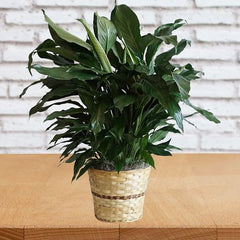

The peace lily is one of those plants people reach for without always knowing why. A peace lily turns up at funerals, on office desks, and in get-well deliveries, and a healthy peace lily keeps growing long after a cut bouquet has faded. Those elegant white blooms and dark green leaves make the plant a welcome addition to any plant collection, but the staying power is the real draw, and it is why peace lily care is worth getting right. The plant stands for sympathy, peace, and renewal. This guide covers what a peace lily symbolizes, why it became the sympathy plant, and how to care for and grow a peace lily so it keeps blooming year round.
What a peace lily symbolizes
A peace lily carries a few layered meanings, and they all point in the same gentle direction. The white spathe, the leaf-like petal most people picture as the flower, looks a little like a small white flag. For centuries a white flag has meant peace and truce, so the peace lily reads as calm the moment you see it. White also signals purity and innocence, which is why the peace lily shows up so often at services and memorials.
There is a second meaning that matters even more in grief. Peace lilies are evergreen plants native to the forest floor of Central and South America, and they do not bloom once and quit. With basic care a peace lily pushes out new white flowers again and again, so people came to see the plant as a sign of rebirth and the quiet continuation of life. Some people read a spiritual note into that cycle too, keeping the peace lily as a small symbol of a spirit at rest. Sending a peace lily says the person is remembered, and that life, in some form, keeps going.
One quick clarification, since the name confuses people: a peace lily is not a true lily at all. It belongs to the genus Spathiphyllum, a group of tropical plants grown around the world as houseplants. Peace lilies also have well-known air purifying qualities. NASA's clean air research listed them among houseplants that help filter indoor air and improve air quality, and while you would need a lot of plants to really change the air quality in a room, it is a nice bonus on top of the looks.

Why the peace lily became the sympathy plant
Part of it is symbolism, and part of it is plain practicality. A grieving family is juggling a hundred small tasks. A cut arrangement is beautiful for about a week, then it needs tossing. A peace lily asks almost nothing and gives back for years, which feels like the right gesture when you want your sympathy to last past the funeral.
Here is the honest trade-off. If you want something that fills a room at a service and reads from across the chapel, a large cut arrangement still wins on impact. If you want a gift that sits in someone's home months later and keeps reminding the family they were cared for, a peace lily is the better call. Most people sending to a home rather than a service are happier with a living plant.
Our best-selling peace lily plants for this purpose start with the Peace Lily Plant for Sympathy, and the Comfort Planter Spathiphyllum is a close second when you want a fuller, potted look. You can see the whole range on our sympathy plants page, which sits inside our wider sympathy flowers collection.
Peace lily care at a glance
Peace lily care comes down to four things: bright indirect light, water when the top inch of soil is dry, warmth with some humidity, and a pot that can drain. Get those right and peace lilies thrive with almost no fuss. The plant prefers to tell you what it needs, usually by drooping when it is thirsty, so keeping one alive is mostly a matter of reading the signs. The rest of this guide breaks each part of peace lily care down.
How to care for a peace lily
Light and where to place it
Grow a peace lily in bright, filtered light. A spot a few feet back from an east facing window or a north facing window gives the filtered sunlight the plant likes. Avoid direct sunlight: too little and the plant will not get enough light to bloom, too much direct sun and it scorches a brown, crispy edge onto each leaf. A peace lily will tolerate low light conditions, and it handles light shade better than most flowering plants, but in low light it stops blooming and just holds its dark green leaves. If your peace lily has gone all foliage with no flowers, more light is the first thing to try. Place the plant where it gets steady light and turn the pot every couple of weeks so growth stays even and no single leaf leans hard toward the sun.

Watering
Water is where peace lilies shine. The leaves wilt and the plant droops when it needs water, then perk back up within hours of a drink, so a peace lily basically tells you when to water. Water when the top inch of soil feels dry, usually about once a week in the growing season and a bit less in winter. Use room temperature water, and keep the soil moist but not soggy. Never let the plant sit in a saucer of water, because soggy soil and overwatering cause root rot, and most master gardener guides agree overwatering is the fastest way to kill a peace lily. Make sure the pot can drain freely so the roots never stand in water. A peace lily will wilt hard if you forget it, but it forgives a good soak fast. If drooping does not recover after you water, suspect a root problem rather than thirst. Where tap water is heavily chlorinated, water peace lilies with filtered or distilled water instead.
Soil, pot, and repotting
Grow a peace lily in a light, well drained potting mix that stays a little moist without going wet. A rich, peat moss based, all purpose potting soil works fine, and this is the kind of potting mix peace lilies do best in. The pot matters as much as the soil: pick a container with drainage holes so excess water runs out and the roots can breathe. A container that is too large holds too much wet soil around the roots, so size up to a slightly larger pot only when the roots fill the pot or start circling the bottom. When you repot, lift the whole root ball, tease the roots loose, and set the plant into refreshed soil at the same depth. A peace lily that has just been repotted may sulk for a week, so keep it warm and lightly watered while it settles. Spring is the best season to repot.
Humidity and temperature
Native to warm tropical regions, a peace lily prefers warmth and moisture in the air and dislikes cold temperatures, though it can tolerate short periods of cooler air. Normal room temperature between 65 and 80 degrees suits the plant well. Keep the peace lily away from cold drafts and from heating vents. A quick misting every few days, or a spot in a brighter bathroom, keeps the leaf tips from browning in dry winter air and holds humidity closer to what the plant prefers. Brown tips are almost always caused by dry air or mineral-heavy water rather than anything serious.
Feeding
Feed lightly. A balanced houseplant fertilizer every six to eight weeks in spring and summer is plenty, and you can skip fertilizer entirely in winter. If you would rather not fertilize on a schedule, feed peace lilies once at the start of the growing season, which is enough to encourage flowering and push new leaves. Too much fertilizer shows up as a brown leaf tip, so go easy.
Pruning and cleaning
Prune spent flowers and remove dead leaves by cutting the stalk back to the base with clean scissors. Wipe dust off the big glossy leaves with a damp cloth every couple of weeks, cleaning each leaf gently, because a clean leaf photosynthesizes better and keeps that deep green shine. Remove and prune off any damaged leaf as you see it. Peace lilies rarely suffer pests or diseases, but check the underside of a leaf now and then for spider mites, especially in dry air, and treat any pests you find with insecticidal soap or a wipe of soapy water.
How to grow, propagate, and divide peace lily plants
Growing peace lilies from a plant you already own is simple, because they grow in clumps. The easiest way to propagate a peace lily is to divide it. When you repot a large plant, carefully separate the root ball into two or three smaller plants, each with its own roots and leaves, then pot each one up in fresh mix. Division in spring barely slows the plant down, and growing peace lilies this way is the reliable route to more plants for free. New growth comes from the base, so keep the crown at soil level and do not bury it. A few cultivars and types exist, from the compact speckled 'Domino' to the waist-high 'Sensation', and every one is grown and propagated the same way. Follow these steps and one thriving plant quickly becomes several.
Peace lily blooms: what to expect
The white bloom on a peace lily is not a single flower. The showy white part is the spathe, and the cream spike it wraps around, the spadix, holds the true flowers. A peace lily will bloom mostly in spring, and a happy plant can bloom again later in the year, so you often get white flowers more than once. To encourage flowering, give the plant bright light and a spring feed. Each bloom lasts for weeks, then fades to green and brown before it drops, which is normal. If your plant will not bloom at all, low light is the cause nine times out of ten. Move it somewhere brighter and give it a few weeks to grow a new bloom.
Common peace lily problems and quick fixes
Yellow leaves are the most common complaint, and they usually mean overwatering. Let the soil dry more between waterings, make sure the pot can drain, and remove the leaves that turn yellow at the base. If only the lowest leaf or two turn yellow, that is often just age. Brown tips are usually caused by underwatering or low humidity, so try misting and filtered water. Wilting leaves that perk up after a drink are just thirsty, but a peace lily that keeps wilting in moist soil is likely root-bound or has standing water that may cause root rot. No blooms is a light problem. Each of these is easy to reverse once you spot the sign early and follow the fix.
Is a peace lily toxic to pets and kids?
This is worth saying plainly. A peace lily is mildly toxic to cats, dogs, and small children if the leaves get chewed. The leaves contain calcium oxalate crystals, which cause mouth and throat irritation, drooling, and an upset stomach, and in larger amounts some respiratory irritation. It is rarely serious, but it is real, so place the peace lily somewhere out of reach in a home with curious pets or toddlers. If you are sending a sympathy gift to a household with pets, a cut arrangement or a pet-safe blooming plant can be a kinder pick, and our team can point you to options.
Sending a peace lily as a sympathy gift
James Cress Florist has been a family florist since 1903, and sympathy is the work we take most seriously. Every peace lily is arranged and hand-delivered by a local florist near the recipient, not packed in a box and left on a doorstep. If a specific peace lily or container is not available, our designers substitute an item of equal or greater value so the gift still arrives looking its best.
For same-day delivery, order by 2:00 PM Monday through Saturday, or by 12:00 PM on Sunday, in the recipient's local time zone. If you are not sure what to send or when, our sympathy flower etiquette guide covers the timing and the small questions people tend to worry about. If you would rather send a blooming plant with a brighter, seasonal feel, our Easter lily care guide is a good companion read. You can also start from the James Cress Florist homepage and browse by occasion.
A peace lily is a quiet, lasting way to tell someone you are thinking of them. Keep the soil lightly moist, the light bright, and the plant warm, and your peace lily will keep sending up white blooms for years. That is a fitting thing for a plant whose whole meaning is peace and renewal.
Sources
- Interior Landscape Plants for Indoor Air Pollution Abatement (Wolverton, Johnson and Bounds, 1989), NASA Technical Reports Server.
- Peace Lily: toxic to dogs and cats, ASPCA Animal Poison Control Center, toxic and non-toxic plants list.